
There is a particular satisfaction in making something from the hedgerow. A wreath of ivy and holly cut in December, a bundle of dried grasses from a July meadow, a length of willow woven into a basket in February — each piece carries the month it came from. The trick is knowing what to gather, when it is at its best, and when to leave it well alone. This calendar walks through the UK year, season by season, with an eye on what actually holds up in the hand.
Before you pick a single stem
A few rules matter more than any list of species. Permission comes first: a public footpath gives you the right to walk, not to harvest, and nature reserves, Sites of Special Scientific Interest and many National Trust or Woodland Trust sites have their own rules. On private land, ask the landowner. Most people say yes if you explain what you want and how little you intend to take.
Picking foliage, fruit, flowers and fungi for personal use is generally allowed on land where you have permission, but uprooting a plant is not. Never pull a whole plant from the soil, and never strip bark from a living tree — ring-barking kills it. Nests, eggs and many wild plants are legally protected, so if you don't recognise something, leave it be.
Then there is the craftsperson's rule: take a tenth, not a half. Leave seed heads for the birds, leave the healthiest specimens to set seed, and never clear a patch.
Spring: March to May
March is a twig month. Pussy willow catkins appear before the leaves, and the first hazel catkins hang like lambs' tails. Storm-damaged birch and willow make excellent wreath bases, and fallen twigs cost nothing and harm nothing.
By April, the woodland floor is doing its best work, which is exactly why you should mostly look. Bluebells spread slowly and are easily damaged underfoot; take photographs, not bulbs. If you want spring colour in a project, gather fallen blossom from apple, cherry or blackthorn after a windy day and press it within a few hours, while it still holds its shape.
May brings elderflower, and dried elderflower heads press beautifully into cards and gift tags. Take a few umbels from a heavy-flowering bush and leave plenty to ripen into berries for the birds. Late May is also the moment to cut green willow for weaving, while the sap is up and the withies bend without cracking.
Summer: June to August
Summer is the season of grasses and everlastings. Cut meadow grasses — Yorkshire fog, quaking grass, the seed heads of wild oats — on a dry, warm morning after the dew has lifted. Tie them in bunches no thicker than your wrist and hang them upside down in a dark, airy place; they will hold their shape for months.
Meadowsweet, yarrow and tansy are at their peak now, both for drying and for dyeing. Yarrow gives a soft yellow on wool, meadowsweet a greenish gold. If you dye, keep a notebook: the same plant picked a fortnight apart can give a different colour.
Ferns are ready for pressing in midsummer. Take one frond from the middle of a healthy clump rather than the newest growth, and never from a wall or rock face where they are clinging on. August is your last chance to cut rushes and sedges for chair seats and coiled baskets, before the stems turn brittle.
Autumn: September to November
Autumn does most of the work for you. Conkers, acorns, beech mast and pine cones all fall free, so there is no reason to pull anything from a tree. Take what is on the ground and leave the rest for squirrels, jays and mice.
Fallen leaves are worth more than most people realise. Pressed oak, beech and maple leaves last for years in cards and collages, while oak galls, walnut husks and blackberry juice give deep browns, greens and purples as natural dyes. Wear gloves with walnut — it stains skin for days.
- Conkers — drill for threading, or leave whole for autumn displays.
- Acorns — the caps come away cleanly and suit tiny wreaths and garlands.
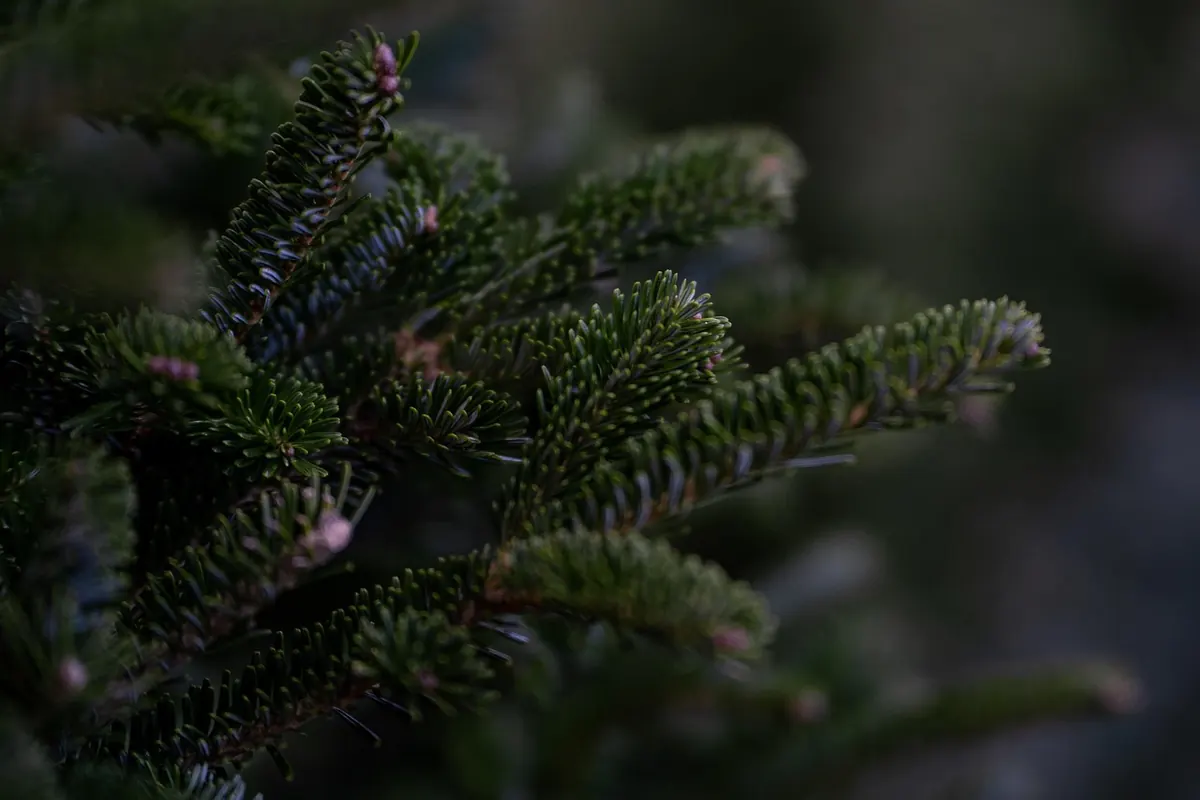
- Pine cones — soak them in water to make them close, then dry them to watch them open again.
- Sloes and blackberries — excellent for ink and dye; leave at least half for wildlife.
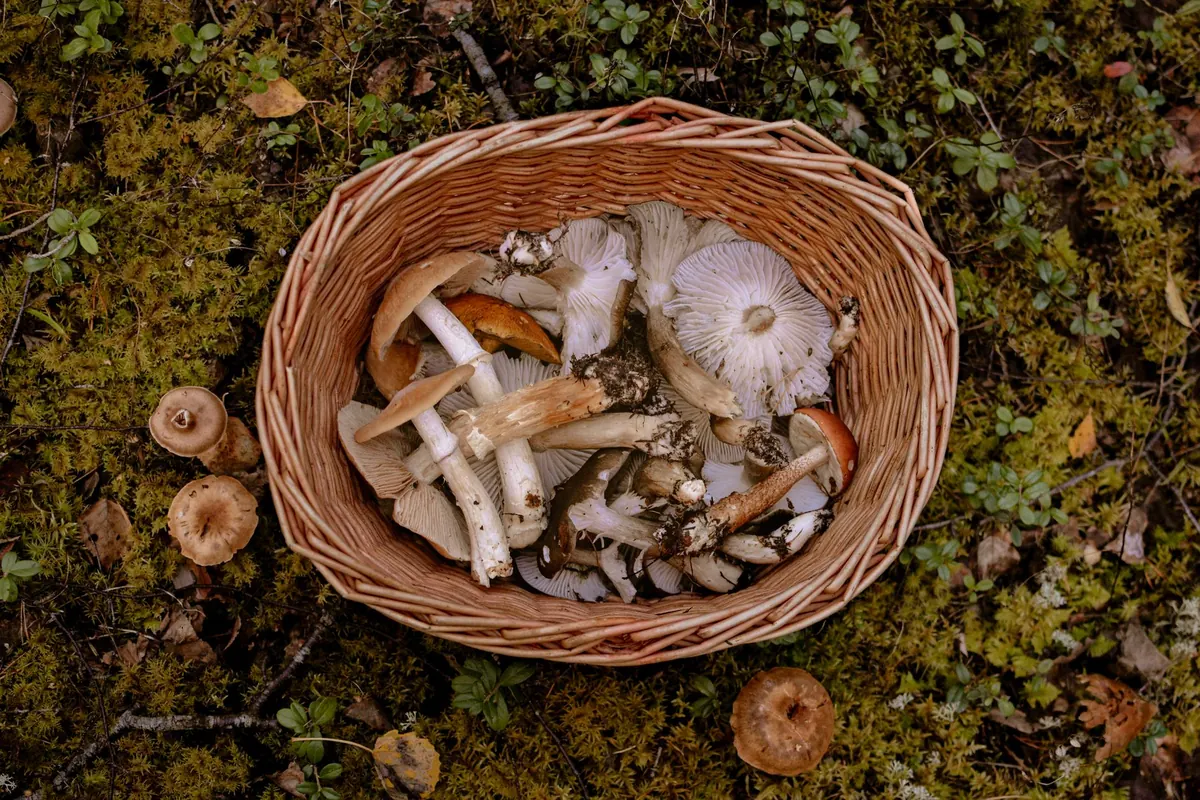
Fungi deserve a word of caution. Spore prints are one of the loveliest nature craft projects, and you can make one from a single cap without disturbing a colony. Never eat a wild mushroom you cannot identify with total certainty, and keep unidentified fungi away from children, pets and food surfaces. If you are unsure whether a plant, a dye or a finished item is safe, check with a qualified forager — or your GP or vet if someone has already come into contact with it.
Winter: December to February
Winter is for wood, evergreens and making. Hazel, dogwood and willow are cut while dormant, from November through February; the stems are paler, stronger and less likely to shrink. Make a clean sloping cut just above a bud, and never take more than a third of the stems from any one shrub.
Holly, ivy and yew carry the season's colour. Take ivy from the ground where it rambles rather than tearing it off tree trunks, and handle yew with gloves — the leaves, bark and seeds are toxic, so keep them away from children, pets and food.
Moss and lichen grow too slowly to be replaced in your lifetime. Gather loose moss from windfall branches or the ground after a storm, and leave the velvet coatings on old trees and stone walls alone.
Never collect these
- Nests, eggs, or anything a bird is still using
- Rare or protected wildflowers, including bluebell bulbs and orchids
- Bark from living trees, or whole moss and lichen colonies from walls and ancient trees
- Anything from a busy roadside verge or a field that may have been sprayed
- Any plant or fungus you cannot positively identify
Make it a habit
Keep a small kit by the door: secateurs, a cloth bag, gardening gloves and a notebook. Date everything you dry, because a bunch of grasses cut in July will look very different from the same species cut in September. Learn three species a month rather than thirty at once, and learn them in the field rather than from a screen.
Above all, collect slowly. The best nature craft is the kind that leaves the hedge better than you found it — and gives you something worth doing in every month of the year.
Photo: carboxaldehyde / Pexels